
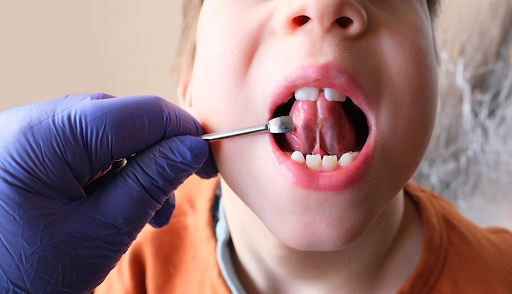
Chronic jaw pain, clicking joints, and tension headaches often send individuals searching for solutions to relieve strain on the jaw. While many patients look directly at the joint itself, the root cause sometimes originates elsewhere in the oral cavity. Ankyloglossia, commonly known as a tongue tie, restricts the tongue’s natural range of motion and forces surrounding facial muscles to overcompensate. Patients seeking tongue tie surgery in London are increasingly identifying that releasing this tight lingual frenulum can alleviate undue pressure on the temporomandibular joint. By addressing this anatomical restriction early, individuals can resolve compensatory muscle habits and potentially reduce or eliminate the need for extensive TMJ disorder treatment.
The Anatomic Connection Between Tongue Restraint and Jaw Strain
The tongue is a powerful muscular organ anchored to the floor of the mouth, hyoid bone, and mandible. In healthy oral mechanics, the tongue rests against the roof of the mouth, supporting the upper dental arch and stabilising the lower jaw. When ankyloglossia is present, the shortened tissue prevents the tongue from reaching its natural resting position on the palate.
To compensate for this lack of upper oral support, the lower jaw drops back, placing continuous stress on the temporomandibular joints. The surrounding facial muscles—specifically the masseter, temporalis, and pterygoid muscles—must work overtime during simple daily functions like chewing, swallowing, and speaking. Over time, this constant muscular tension radiates into the neck and shoulders, creating persistent jaw pain, head pressure, and joint clicking.
Many patients undergo night guards, physical therapy, or splint therapy as part of standard TMJ disorder treatment without realising that an underlying anatomical tether is pulling their jaw out of alignment. Restoring proper tongue mobility takes away the perpetual strain placed on the jaw joints, targeting the root structural issue rather than merely managing secondary symptoms.
How Compensatory Oral Habits Worsen TMJ Pressure
An unfreed tongue tie drastically alters basic functional movement patterns, leading to compensatory oral habits that compromise the temporomandibular joint over time. Swallowing is a prime example: a person without restricted mobility presses the tongue against the palate to move food or liquid backward seamlessly. Someone with a tied tongue, however, uses a tongue thrust movement, pushing the tongue forward or sideways against the teeth while engaging the facial and lip muscles to complete a swallow.
Because humans swallow over 1,500 times per day, this incorrect swallowing pattern exerts thousands of pounds of unnatural pressure against the dentition and jaw frame every single day. Furthermore, tongue restriction frequently leads to mouth breathing, especially during sleep. Mouth breathing forces the lower jaw down and back, compressing the sensitive tissues inside the temporomandibular joint capsule.
These continuous micro-traumas irritate the joint lining, inflame nearby nerve pathways, and deteriorate the articular disc. Releasing the tethered tissue eliminates the physical barrier preventing correct resting posture and natural swallowing. Once the tongue can sit flush against the hard palate, it acts as a natural internal splint, balancing jaw posture and removing the mechanical stress driving chronic jaw distress.
The Modern Frenectomy Procedure in London Clinics
Advancements in dental technology have made undergoing tongue tie surgery in London a straightforward, minimally invasive procedure for both adults and older children. Modern London clinics typically utilise advanced soft-tissue lasers to perform a laser frenectomy rather than traditional surgical scalpels.
During the laser procedure, the practitioner applies a local anaesthetic to ensure complete comfort before using a precise light beam to vaporise the restrictive band of tissue. The laser sterilises and cauterises the area simultaneously, resulting in virtually no bleeding, minimal discomfort, and a reduced risk of post-operative infection. The entire procedure often takes less than fifteen minutes to complete.
Patients can usually return home or to work on the same day with minimal downtime. Following the procedure, specialists prescribe specific wound-stretching exercises to prevent the tissue from reattaching while it heals. Releasing this physical restriction immediately frees the tongue to move upward, relieving the downward dragging force previously exerted on the mandible and providing quick relief to overworked jaw structures.
Integrating Post-Surgical Myofunctional Therapy
While surgical release resolves the anatomical restriction, surgical intervention alone is only one part of complete recovery. Years of living with a tied tongue create strong muscle memory and deep-seated compensatory movement patterns. To maximise the relief provided by the procedure, patients must undergo post-surgical myofunctional therapy to retrain the oral muscles.
Myofunctional therapy acts like targeted physical therapy for the face, mouth, and tongue. A trained therapist guides the patient through structured exercises that rebuild tongue strength, encourage correct resting posture, and correct swallowing habits. These exercises ensure the tongue remains elevated against the roof of the mouth rather than falling back into the airway or pressing against the teeth.
Without this neurological retraining, patients might continue using old, harmful swallowing patterns despite having the physical freedom to move correctly. By combining surgical release with targeted myofunctional rehabilitation, individuals build sustainable muscular balance. This holistic approach stabilises the lower jaw, prevents muscle fatigue, and significantly lowers the likelihood of needing long-term, invasive TMJ disorder treatment later in life.
Comprehensive Diagnostics and Multidisciplinary Care
Resolving chronic jaw issues requires accurate diagnosis and a collaborative treatment plan. Because jaw strain presents with varied symptoms, patients often spend months visiting general dentists, osteopaths, and doctors without getting a clear answer. Assessing oral restriction requires a thorough evaluation from a clinician experienced in identifying adult ankyloglossia.
A complete evaluation includes examining tongue elevation, lateral movement, swallowing function, and resting jaw alignment. When choosing tongue tie surgery in London, patients should seek clinics that collaborate with osteopaths, chiropractors, and speech-language therapists. This multidisciplinary care ensures that muscle tension in the neck, cranium, and shoulders is addressed alongside the surgical release.
Releasing the tongue releases a primary structural strain line running through the anterior fascia of the neck and chest. Addressing these interconnected anatomical structures simultaneously yields the fastest, most durable outcomes. Investing in comprehensive care at the start ensures that structural conflicts are solved at their root, preserving natural joint mechanics and eliminating persistent facial pain.
Final Thoughts
Persistent jaw tension, clicking, and facial headaches do not always require complex, lifetime management focused solely on the jaw joint. In many cases, a restricted lingual frenulum is the true root cause, forcing muscles to work unnaturally and pulling the mandible out of alignment. Opting for a surgical release offers an effective, minimally invasive solution to restore normal oral function and relieve continuous strain on surrounding joint tissues. By combining frenectomy procedures with dedicated myofunctional therapy, patients can permanently correct compensatory habits, protect their jaw health, and substantially decrease their reliance on long-term jaw joint interventions.
