
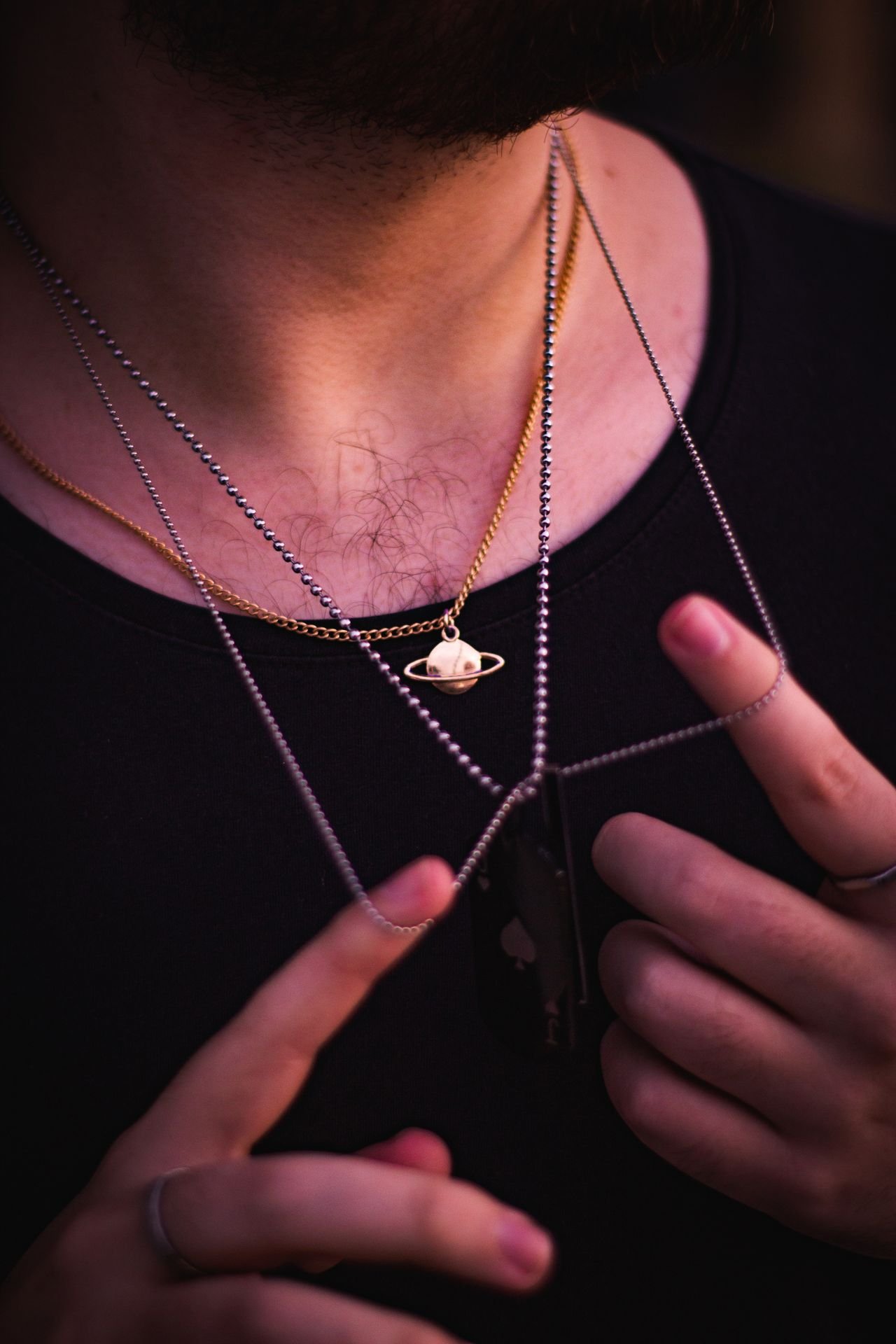
Walk through any college campus, café, or office space today, in Shillong or Seoul, London or Lagos, and a quiet pattern starts to emerge. Young men who a decade ago might have worn nothing at all, or leaned toward chunky, attention-grabbing pieces, are increasingly opting for something smaller: a thin silver chain, a single plain ring, a simple bracelet worn every day without much fuss. It is not a loud trend. It does not announce itself with a hashtag or a celebrity endorsement moment. But it is happening almost everywhere at once, and the reasons behind it say something interesting about how a global generation of young men is thinking about identity, money, and self expression.
A Trend With No Single Point of Origin
What makes this shift notable is that it is not being driven top-down by one fashion capital dictating taste to the rest of the world the way trends often used to spread. Minimalist menswear, and minimalist jewelry specifically, has emerged more or less simultaneously across very different cultural contexts: in East Asian street style, in European quiet luxury circles, in North American capsule wardrobe communities, and increasingly in the everyday style choices of young men in smaller cities and towns who are connected to all of these aesthetics through social media rather than physical proximity to any single fashion scene.
This matters because it suggests the appeal is not really about imitating a particular celebrity or region. It is responding to something more universal: a generation that grew up online, watched older models of status signaling lose some of their credibility, and is now building its own quieter version of what it means to look put together.
Why Minimal Reads as More Confident, Not Less
There is a common assumption that minimalism in style means someone does not care about how they look. In practice, the opposite tends to be closer to the truth among younger men adopting this look deliberately. Choosing one well made piece over several mismatched ones takes more intention, not less. It reflects an aesthetic judgment: knowing what to leave off is itself a skill, and a visible one among peers who are paying closer attention to style than previous generations often assumed.
Psychologically, this connects to a broader shift away from what researchers sometimes call performative status display, the idea that worth has to be demonstrated loudly through visible spending. Younger men, particularly those who came of age during periods of economic uncertainty, often show more skepticism toward loud displays of wealth and more interest in things that read as considered, durable, and personal rather than purely expensive.
The Economics of a Global, Connected Generation
Social media has flattened fashion discovery in a way that matters specifically for a trend like this one. A young man in a smaller city no longer needs to live near a major fashion capital to see what minimalist menswear looks like; he sees it on the same platforms as everyone else, often from creators who are not traditional fashion influencers at all but simply document their daily lives, their outfits included.
This connectivity also changes what is economically accessible. A single silver chain or bracelet is a far smaller financial commitment than overhauling a wardrobe around a particular aesthetic, which makes jewelry one of the easiest entry points into a broader style identity. For young men navigating rising costs of living in many parts of the world, a considered, lasting accessory can feel like a more sensible investment than a larger wardrobe overhaul, and one that still visibly signals attention to personal style.
Why Silver Specifically
Within this broader minimalist shift, silver has emerged as the material of choice over gold for a fairly practical set of reasons. It reads as cooler and less overtly tied to the kind of wealth signaling gold traditionally represented. It photographs differently under the lighting most phone cameras use, which matters more than it might sound given how much style discovery now happens through screens rather than in person. And it tends to be more affordable at a comparable level of quality, which matters to a demographic that is often prioritizing value and durability over flash.
Solid sterling silver, often labeled 925 to indicate its exact purity, has become something of a quiet standard within this trend precisely because it balances affordability with longevity. A 925 silver mens bracelet built to this standard can be worn daily for years without the surface degrading the way a plated or lower quality piece would, which fits neatly into a style philosophy built around fewer, better things rather than a rotating wardrobe of cheaper accessories.
Layering as a Quiet Form of Personal Expression
One behavior that shows up consistently across different regions adopting this trend is layering, combining a chain, a bracelet, and sometimes a ring into a small, considered set rather than wearing any single piece in isolation. This mirrors how many young men are now approaching their wardrobes more generally, building a personal uniform of a few versatile, well chosen pieces rather than a large collection of disposable ones.
A ring is often the natural second or third piece added to this kind of rotation once a chain or bracelet is already in regular use. mens sterling silver rings in a matching finish to an existing bracelet or chain tend to be a common next step, since keeping the metal tone and finish consistent across pieces makes the layered look read as deliberate rather than accidental, which is a distinction young men adopting this style tend to care about quite specifically.
What This Signals About Where Style Is Heading
The broader significance of this trend is less about jewelry specifically and more about what it reveals regarding how a connected, globally aware generation of young men thinks about personal style overall. Status is increasingly being communicated through consistency, material quality, and personal meaning rather than visible expense alone. A ring worn daily for years carries a different kind of social signal than one bought for a single occasion and never worn again, and young men across very different cultural contexts appear to be converging on that distinction independently.
For a region like Meghalaya, with its own rich traditions of personal adornment and craftsmanship running alongside increasing exposure to global style conversations through social media and travel, this global minimalist shift offers an interesting parallel. The specific materials and designs may differ from one culture’s jewelry traditions to another, but the underlying instinct, toward considered, lasting pieces chosen with intention rather than simply following whatever trend is loudest in a given moment, appears to be a genuinely global one rather than something confined to any single fashion capital.
What Buyers Should Know Before Joining the Trend
For anyone considering a first piece, a little practical knowledge goes a long way, since the market for men’s jewelry has expanded quickly enough that quality varies widely between sellers. The clearest signal of a well made piece is a stated material purity, such as 925 sterling silver, rather than a vague description like silver tone, which often indicates a thin coating over a cheaper base metal that will wear unevenly within months.
A visible hallmark stamp, usually reading 925 and pressed directly into the metal near the clasp, is another reliable indicator worth checking for in product photography before buying. Fit matters just as much as material, since a bracelet or ring that is the wrong size tends to get left in a drawer regardless of how well it was made, so measuring a wrist or finger properly before ordering saves both money and disappointment.
None of this requires specialist knowledge, just a willingness to look past a polished product photo and check for the specific, verifiable details that separate a piece built to last from one that only looks that way in a listing. For a trend built around durability and consistency rather than disposability, that small amount of diligence is really the whole point.
A Trend Likely to Keep Growing
As more young men discover this aesthetic through the same global platforms that introduced it in the first place, demand for well made, honestly described silver jewelry is likely to keep growing well beyond any single market. Brands built around transparent material standards, such as NineTwoFive, are positioned to benefit from this shift precisely because the appeal is not really about following a particular region’s fashion lead. It is about a quieter, more universal set of values: durability, consistency, and a style that speaks for itself without needing to shout.
Whatever region a young man happens to be dressing for each morning, the underlying instinct behind this trend looks remarkably similar: choose fewer things, choose them carefully, and let them last.
READ ALSO: Filing for Divorce in the UAE When One Spouse Lives Abroad
