
What the Best Hands Free Breast Pump Adds Beyond Basic Wearables
Shopping for the best hands free breast pump usually starts with suction numbers, but a full workday tests fit, noise, charging, and cleanup instead. Premium wearables do not always stand out on day one, but they start to matter around the tenth session, when leaks and sink time decide whether you keep pumping at work or after midnight. This guide covers movement and seal stability, comfort over time, all-day charging and noise, long-term cleaning, and when premium pumps are worth the upgrade.
General information only, not medical advice.
Mother with breast pump sits in a car backseat during commute.
Table of Contents
- Basic Wearable and Premium Pumps Compared
- Fit, Seal Stability and Real Movement
- Comfort, Warmth, and Pumping Efficiency Over Time
- Noise, Charging, and Full Day Mobility
- Cleaning Load and Long-Term Usability
- When the Best Hands Free Breast Pump Is Worth the Upgrade
Basic Wearable and Premium Pumps Compared
A basic wearable puts a motor and milk cup in the bra and lets you move without a wall plug. That is a real upgrade for occasional sessions. Premium hands free pumps target a different problem: keeping the routine usable after several back-to-back days.
On day one, both can feel fine sitting upright. By day seven, the gap shows up in small failures, like a seal that breaks when you lean forward, a buzz that makes you skip a work session, a dead battery before the evening pump, or seven small parts waiting at the sink. Premium design tries to remove those friction points before they become reasons to quit.
No single feature explains the gap. What matters is how fit, comfort, noise, power, and cleaning hold up as your day shifts between desk work, a commute, helping a toddler mid-session, and a late pump near a sleeping baby.
| What you notice | Basic wearable (early days) | Premium wearable (after repeated use) |
| First session | Often feels fine when you are sitting upright | May feel similar at first |
| Day 7 to 30 | Leaks, noise, charging, and cleanup compound | Movement, comfort, and routine stay steadier |
| Best for | Occasional backup pumping | Daily work, travel, and multiple sessions |
Fit Seal Stability and Real Movement
Caregiving does not happen at perfect angles. A pacifier drops, a toddler needs lifting, or you bend to load the dishwasher, and a basic seal can fail five minutes before daycare drop-off. A top-rated hands-free breast pump on paper means little if milk hits your shirt the moment you move.
Premium wearables invest in seal geometry and contact materials so the cup stays stable through real motion, such as walking between rooms, leaning to pack a bag, or shifting in a car seat. That stability also protects comfort. When a cup shifts, the nipple rubs the tunnel or sits off-center, which can mean pinching, swelling, or lower output over repeated sessions, not just one bad morning.
Where premium fit shows up after repeated use
- Leaning forward without losing the seal
- Walking without holding the cups in place
- Aligning quickly in dim rooms without spreading parts on a table
- Keeping suction steady through a full session
- Spending less energy checking for leaks every few minutes
This is why fit details deserve more attention than they usually get in quick reviews. A steady seal, clear alignment, and materials that stay comfortable through movement can decide whether a wearable feels useful after the novelty wears off. Cleveland Clinic’s flange sizing guidance makes the point more specifically. A proper flange fit should feel comfortable, reduce rubbing or swelling, and support effective milk removal, so fit belongs in the practical checklist, not the cosmetic column.
Comfort, Warmth, and Pumping Efficiency Over Time
Strong suction listed on the box can sound reassuring. Milk flow, though, depends on letdown, and letdown often responds to comfort, warmth, and whether your body can settle into the session. A cold flange with a harsh pull may create suction while your shoulders stay tense. That tradeoff often hides until the third or fourth session of the same day.
Premium hands free pumps add comfort tools basic wearables skip, including controlled warmth before and during expression, gentle vibration or massage to support letdown without cranking suction, and finer mode control that moves closer to a feeding rhythm. The benefit is cumulative. Heat and massage matter less in a single demo and more when you are pumping at 6 a.m., noon, and 10 p.m. on the same schedule.
Gentle warming settings can make repeated sessions feel less abrupt than starting cold each time. Massage or stimulation modes may support letdown without pushing suction to an uncomfortable level. Some parents do fine with suction alone; others need warmth and slower transitions to keep sessions tolerable in week two. The best wearable hands free pump gives you ways to adapt the session to your body, not just a higher mmHg number.
Noise, Charging, and Full Day Mobility
Noise and power look minor on a product page. By the second week, they decide where you can actually pump, whether that is beside a sleeping baby, in a quiet office, or on a plane without feeling exposed.
Basic wearables often carry a sharper buzz that cuts through a quiet room. Premium motors aim for softer, less obvious sound. At 46 dB operation, a pump is quiet enough for a shared office or a late session near a crib. Those distinctions matter on day ten, not day one.
Charging follows the same arc. Basic models may charge each side separately, which means two cords, two battery levels, and two things to forget before leaving. Premium systems treat power as part of the daily routine. A wireless charging case stores both sides, protects them in a bag, and tops up between sessions so a full workday or travel day does not end with one dead cup. App control reduces awkward reaching under clothing when you need to change mode mid-session.
When you compare hands free breast pumps for a full weekday, look at the whole day, including the morning desk session, commute or meeting gap, evening pump, and whether both sides leave home fully charged. The eufy breast pumps range is one place to start. A wireless charging case is often what turns a wearable from “works sometimes” into “works on the schedule I actually have.”
Cleaning Load and Long Term Usability
Every pump collects milk and must be cleaned well enough to use again. Reviews focus on the first job; parents live with the second. A cup with eight or nine pieces may feel manageable once. After three sessions a day for thirty days, plus a hungry baby and a missing valve, the pump that saved time during expression gives it back at the counter.
CDC guidance is clear that parts that touch milk need careful cleaning. The easier it is to separate, wash, dry, and reassemble the parts, the more likely the routine survives hard days. Premium design often shortens the milk path and trims piece count. Five parts per side, for example, means fewer hiding spots for residue and fewer pieces to lose when you pack in a hurry.
This is where cheap pumps often lose their price advantage, not on purchase day, but on day thirty when maintenance fatigue sets in. The right comparison is pump, charge, carry, clean, and do it again tomorrow. Browse the wider eufy baby when you want pumps, accessories, and daily care gear that fit the same long-term routine.
When the Best Hands Free Breast Pump Is Worth the Upgrade
Not every parent needs a premium pump. If you pump occasionally, let down easily, and already own a dependable primary pump, a basic wearable may be enough.
The upgrade makes more sense when pumping is built into your week, not a one-off experiment. Ask which scenes repeat, such as workdays with short breaks, travel with uneven outlets, night sessions near a sleeping child, or three or more pumps a day with limited sink time.
A premium hands free pump is more likely to earn its price if you
- Pump at work or during a commute most days
- Need quiet sessions near coworkers or a crib
- Are sensitive to cold flanges, harsh suction, or soreness that builds over the week
- Lose time washing too many small parts between sessions
- Want a travel setup that keeps both sides protected, charged, and controlled from an app
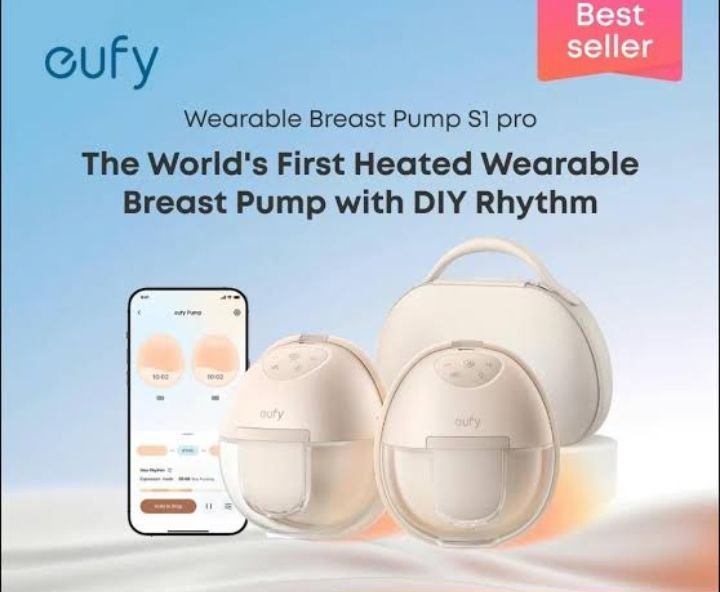
If you pump several times a day, the eufy Wearable Breast Pump S2 Pro is a fit for that upgrade. At $449.99, it is built for parents who pump daily and need more than a basic $100–$200 wearable usually offers over time. Its double-sealed silicone flange and 360-degree see-through alignment with nipple light help with movement and setup in dim rooms. HeatFlow™ 2.0 warmth and VibraPump™ massage support comfort across repeated sessions, while app control and 46 dB operation work well for office or nighttime pumping. A wireless charging case and five washable parts per side also keep both sides powered and make cleanup easier after daily use.
Conclusion
Choose for the week you actually have, not the perfect product photo. A basic wearable works well for occasional pumping. Premium hands free pumps matter when fit, comfort, noise, power, and cleaning must hold from the first session through the tenth. The better pump fits your body, your schedule, and the cleanup at the end of the night. For work, travel, and frequent sessions, premium features are often what keeps the routine going.

1 Comment
Pingback: Rhinoplasty Abroad: Turkey or Poland for Your Nose Job?