
Finding useful information online sounds easy. But every website is different.
Some focus on news. Others publish advice. Then there are websites covering several subjects under one name.
Fenchar.com belongs to that last group.
It is an English-language online publication covering business, technology, education, health, fashion, travel, and everyday lifestyle subjects. Readers can browse articles, find practical advice, and learn about topics that interest them.
The website also welcomes outside writers.
But a few questions matter. Who manages the platform? How does its publishing system work? And what should readers check before trusting its content?
Here is what the available information tells us.
Quick Facts
| Feature | Details |
|---|---|
| Website Name | Fenchar |
| Domain | fenchar.com |
| Website Type | Online magazine and informational blog |
| Primary Language | English |
| Content Focus | Business, technology, health, education, lifestyle |
| Guest Posting | Accepted, subject to editorial review |
| Recommended Article Length | At least 800 words |
| Public Contact Email | guestpost@technicalinterest.com |
| Recent Publishing Activity | October 2026 |
| Legal Owner | Not independently confirmed |
| Headquarters | Not publicly verified |
| Website Launch Date | Not confirmed |
| Organic Traffic | Not independently verified |
| Standard Guest Post Fee | Not publicly stated |
Understanding the Website’s Main Purpose
The idea is pretty simple.
Fenchar.com publishes information for general readers, professionals, and people interested in learning new things.
Its About Us page describes a publication focused on useful knowledge, practical ideas, and updates from different industries.
That explains its wide coverage.
A visitor might read about business today. Tomorrow, they could find articles about skincare, home improvement, or travel.
There is no single subject.
The website mainly works as a content publication. It is not presented as an online shopping platform, job portal, or specialist business software service.
Readers visit to find articles.
Writers can also contact the editorial team to propose new material.
What Type of Content Can You Find?
The website covers several categories.
Some articles explain common problems. Others discuss professional subjects, lifestyle choices, or practical advice.
Let’s look at what appears.
Business and Professional Topics
Business content has a visible place.
Articles cover industry issues, practical workplace subjects, and business-related information.
One example discusses biofilm control in California industrial water systems. The article appeared with a publication date of October 22, 2026.
That is a fairly specialist subject.
It also shows that the site’s business coverage extends beyond general startup advice.
Still, readers should check technical claims before using them in professional work.
Technology and Online Marketing
Technology is another stated subject.
The publication identifies software, digital marketing, and SEO among the topics it covers or accepts from contributors.
These subjects can interest business owners, marketers, and everyday internet users.
But technical advice needs checking.
An article may provide a useful starting point. It does not automatically replace official product instructions or specialist documentation.
Health and Wellness
Health content appears across the website.
Readers can find articles discussing wellness, diet, skincare, and related subjects.
For example, the site has published material about green tea for skin, aloe vera, and everyday health habits.
These topics attract plenty of interest.
Yet health claims deserve extra care. A general blog article cannot diagnose a condition or replace advice from a qualified healthcare professional.
Education and Learning
Education also gets attention.
Published subjects include online courses, study habits, and ways to improve academic performance.
Such material may help students discover new ideas.
But facts still matter.
Readers should verify important academic information with schools, universities, or recognised educational organisations.
Fashion, Beauty, and Travel
There is plenty of lighter reading.
The website features articles about clothing, makeup, haircare, and travel destinations.
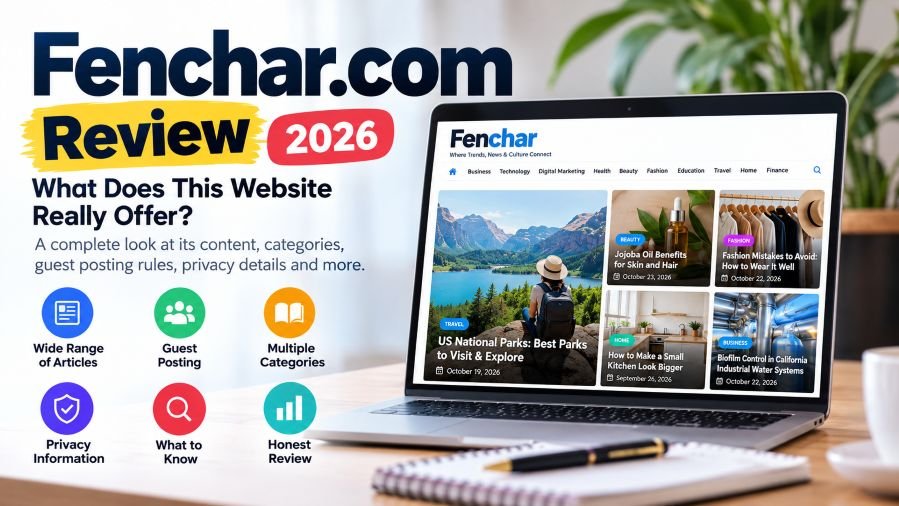
Its October 2026 homepage displayed pieces about lipstick shades, hair oils, fashion mistakes, and visiting national parks.
A travel article about luxury hotels in Sri Lanka was also displayed with an October 26, 2026 date.
This mix makes the publication suitable for people with different interests.
How Does the Platform Work?
Getting around is fairly simple.
Visitors open the homepage. They can choose a category, check recent posts, or use the search field.
Clicking an article opens its full page.
Posts commonly display a headline, publication information, an author label, and the main written content.
Some include a contents section.
The homepage also separates certain stories into featured and recent content areas.
That gives it a familiar magazine feel.
There is also a sign-in option. Its presence does not establish that a paid membership or special reader service exists.
For ordinary visitors, reading the published articles is the main activity.
Does It Publish New Articles?
Yes, recent activity is visible.
During the October 26, 2026 review, the website displayed posts dated October 26, October 24, October 23, and earlier.
That suggests ongoing publishing activity.
But here is the catch.
A recent article date does not prove how many people read the website. It also cannot tell us how large the editorial team is.
Publishing regularly and publishing accurately are two different things.
Both deserve attention.
Can Writers Submit Their Own Articles?
Yes. The website has an official Write For Us page.
It welcomes writers, industry professionals, and businesses that want to share useful information.
The submission process starts with an article idea or draft.
The stated guidelines include:
- Submit original, unique content.
- Write information that readers can use.
- Aim for at least 800 words.
- Use clear headings and paragraphs.
- Avoid excessive promotional material.
- Follow the publication’s editorial standards.
Every submission is subject to review.
The editorial team says it can edit, approve, or reject contributed articles.
So acceptance is not guaranteed.
How to Contact the Editorial Team
Interested writers can use the public email address:
guestpost@technicalinterest.com
The website asks contributors to include their name, proposed article topic or draft, relevant website or business information, and any publishing requirements.
One detail remains unclear.
The public guidelines do not establish a standard guest-post fee or guarantee free publication.
Writers should confirm the terms before submitting commercial content.
Who Owns and Manages the Platform?
This information needs care.
Fenchar.com displays author labels, including Team Technical and admin, on published articles.
Its About Us page also refers to an editorial team.
But those details are limited.
The publicly reviewed pages do not clearly identify the registered legal owner, founder, or headquarters.
The contact email uses the technicalinterest.com domain.
That shows a contact connection, though it does not establish that both websites share the same legal owner.
The site’s footer also contains a copyright notice referring to Foxiz News Network and Ruby Design Company.
That wording cannot confirm its founding year or ownership.
So the accurate position is simple.
The legal ownership and original launch date remain unverified.
It would be misleading to assign a founder, country, or company name without stronger evidence.
Is the Content Reliable?
A polished website can look convincing.
That alone means little.
The quality of information matters more than its design.
Fenchar.com publishes articles across many subjects. Some provide everyday advice, while others cover more technical questions.
Its contributor guidelines say articles undergo editorial review.
That is a stated policy.
It does not independently prove that every published claim has been fact-checked.
Readers should examine individual articles.
Look at the author. Check supporting evidence. See whether important statements match recognised sources.
Watch for promotional material, too.
An article can be useful while still promoting a business or service. Knowing the difference helps readers make better decisions.
For health, finance, and legal subjects, extra checking is sensible.
What About Privacy and Personal Data?
The website has a published Privacy Policy.
It describes several types of information that may be collected.
These include names and email addresses voluntarily shared through forms, along with browser details, device information, IP addresses, and website usage data.
The policy also discusses cookies.
It states that third-party services, including possible analytics and advertising partners, may be involved.
Visitors can contact the website about personal data requests.
But a privacy policy is a statement of practices. It is not an independent security audit.
So avoid sharing sensitive information unless there is a genuine reason.
That advice applies to almost any unfamiliar website.
Is It Useful for SEO and Guest Posting?
For content marketers, this is an important question.
The website accepts article proposals.
That makes it a possible place to publish relevant material.
But guest-post availability does not automatically mean strong SEO value.
Before arranging a placement, marketers should consider several factors.
Organic traffic: Does the website receive visitors through search engines?
Content relevance: Does its audience match the proposed subject?
Backlink quality: Are existing links relevant and naturally placed?
Editorial quality: Are articles useful, original, and properly reviewed?
Publication terms: Is the placement paid? Will promotional links be labelled correctly?
The answers matter.
No independently verified organic traffic total, Domain Rating, Domain Authority, or referring-domain count was established during this review.
So there is no reliable number to report.
Someone offering a paid placement should provide current evidence of the website’s performance.
Paid promotional links should also follow search-engine link policies.
A good article reaching the right audience may provide value even without a ranking benefit.
What Makes This Website Different?
Its subject range is noticeable.
Many blogs specialise in one field. Fenchar.com covers several.
That variety can help casual readers.
Someone interested in home improvement might also enjoy articles about education or travel.
But broad coverage has limits.
Publishing in several fields does not make one website an expert in all of them.
Each article should stand on its own evidence.
Another noticeable feature is the contributor programme. Outside writers and brands can suggest content for publication.
That creates more opportunities for different voices, though it also places responsibility on the editorial review process.
Things Readers Should Check Before Trusting a Post
Start with the headline.
Does the full article answer the question? Or does it promise information that never appears?
Next, check the facts.
Specific figures, medical advice, professional claims, and legal statements should have dependable support.
Then look at the writing.
Clear explanations are useful. Repeated statements and vague promises are less convincing.
Check publication dates, too.
An older article may still be useful, but its advice could be outdated.
And remember this.
A site with hundreds of articles is not automatically better than a small site with careful research.
Quality matters more than volume.
Strengths and Limitations
| Strengths | Limitations |
|---|---|
| Covers several reader interests | No single specialist subject |
| Recent publication dates are visible | Traffic figures remain unverified |
| Public contributor guidelines | Guest-post fees are not clearly published |
| Accessible article format | Editorial accuracy needs article-level checking |
| Published privacy information | Legal ownership is not clearly established |
| Contact method for contributors | No guaranteed article acceptance |
These points describe what could be checked from public information. They are not an independent security certification or search-performance audit.
Who May Benefit From Reading It?
General readers may find useful starting points for familiar questions.
Students may discover ideas about learning habits.
Business owners can browse some professional and marketing subjects.
Writers may find an opportunity to submit articles.
But expectations should remain realistic.
The platform offers information, not guaranteed professional advice or verified marketing results.
Its value depends on the quality and relevance of the particular article.
Final Thought
Fenchar.com is an active online publication covering a broad range of subjects.
Its strongest visible feature is variety.
Readers can find business information, practical lifestyle advice, educational material, and articles about technology and travel.
The website also accepts outside contributions.
Still, some important details remain open. Legal ownership, confirmed traffic figures, and standard publishing fees were not established through the public information reviewed.
That does not prove the website is unsafe.
It simply means readers should check important claims rather than assume every article is correct.
Use the information as a starting point. Compare facts where necessary. And make decisions based on evidence, not appearances.
Frequently Asked Questions (FAQs)
1. What is Fenchar.com?
Fenchar.com is an online publication covering business, technology, health, education, travel, fashion, and lifestyle topics.
2. Is the website free to read?
Its public articles were accessible without a paid subscription during the review. No claim is made about every possible account feature.
3. Who owns the website?
Its legal owner was not independently confirmed from the public pages examined.
4. Does it accept guest posts?
Yes. The website welcomes article proposals and reviews submissions before deciding whether to publish them.
5. How long should a guest article be?
Its contributor guidelines recommend a minimum of 800 words, with original content and clear headings.
6. Does the website publish recent content?
Yes. The homepage displayed articles dated through October 26, 2026.
7. Is it a trusted website?
It is an active publishing website with accessible information pages. However, ownership transparency and individual article accuracy require further checking.
8. Does it have strong SEO traffic?
Reliable current organic traffic and authority figures were not independently established during this research.
