
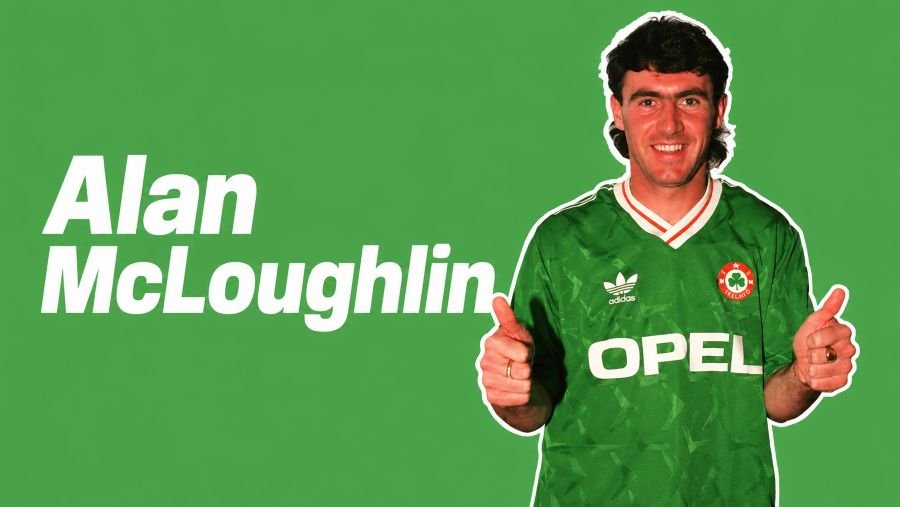
Introduction
Alan McLoughlin was an Irish footballer whose career tells a strong story of resilience, patience, national pride, and quiet greatness. He was not always the biggest name on the pitch, but he became part of Irish football history through one powerful moment that changed the course of a World Cup campaign. His famous goal against Northern Ireland in 1993 helped the Republic of Ireland qualify for the 1994 FIFA World Cup, making him a permanent part of the nation’s football memory.
Alan McLoughlin also built a long and respected club career, especially with Swindon Town and Portsmouth. His journey included early disappointment at Manchester United, success at Swindon, loyalty at Portsmouth, coaching after retirement, and deep family devotion. His life had proud achievements and painful struggles, but his legacy remains positive, human, and inspiring.
Quick Bio
| Field | Details |
|---|---|
| Real Name | Alan Francis McLoughlin |
| Date of Birth | 20 April 1967 |
| Birthplace | Manchester, England |
| Date of Death | 4 May 2021 |
| Age at Death | 54 |
| Nationality | Irish |
| Profession | Professional footballer, coach, academy manager, football media co-commentator |
| Position | Midfielder |
| Height | 1.73 m |
| Spouse | Debbie / Debra McLoughlin |
| Children | Two daughters, Abby and Megan |
| Parents’ Background | Father from Galway, mother from Limerick |
| International Team | Republic of Ireland |
| International Caps | 42 |
| International Goals | 2 |
| Best Known For | Scoring against Northern Ireland in 1993 to help Ireland reach the 1994 World Cup |
Alan McLoughlin Early Life and Irish Background
Alan McLoughlin was born on 20 April 1967 in Manchester, England. Although he was born in England, his roots were deeply Irish. His father came from Galway and his mother came from Limerick, giving him the family heritage that connected him strongly to Ireland and later allowed him to represent the Republic of Ireland at international level.
Growing up in Manchester, he lived close to football culture from an early age. His surroundings helped shape his love for the game, but his road to professional football was not simple. Alan McLoughlin had to prove himself through discipline, patience, and determination before becoming a recognized Irish footballer.
Family and Personal Life
Alan McLoughlin was married to Debbie, also referred to in some public reports as Debra. He had two daughters, Abby and Megan. His family life was an important part of who he was, especially after football, when tributes described him as humble, kind, funny, and deeply loved by his daughters.
His daughter Megan later spoke about him with warmth and emotion, showing that he was not only admired as a footballer but also cherished as a father. This personal side of Alan McLoughlin gives his story more depth because his legacy was not only built through goals and matches, but also through love, family, and character.
Start of Football Career
Alan McLoughlin began his football journey at Manchester United. He joined the club as a trainee in 1983 and later became a professional in 1985. However, he did not make a senior first-team appearance for Manchester United, which could have ended the dream of many young players.
Instead of giving up, he moved forward. That early disappointment became part of his development. Alan McLoughlin left Manchester United and joined Swindon Town in 1986, where he finally found the platform to grow as a professional midfielder.
Swindon Town Career
Swindon Town became the club where Alan McLoughlin first made a serious name for himself. He joined in 1986 and gradually developed into an important player. His technical ability, movement, and scoring from midfield helped him become a valuable figure in the team.
One of his biggest moments came in 1990 when he scored the winning goal in the Football League Second Division play-off final against Sunderland. That goal was a major achievement in his club career and showed his ability to perform under pressure. For Swindon Town supporters, Alan McLoughlin remains remembered as a player who contributed to an exciting period in the club’s history.
Southampton and Portsmouth Career
After his success at Swindon Town, Alan McLoughlin moved to Southampton in 1990. His time there was shorter and less defining than his spells at Swindon and Portsmouth, but it still formed part of his journey through English football.
Portsmouth became the club most closely connected with his name. He joined Portsmouth in 1992 and went on to make more than 350 appearances. He became a loyal and respected figure at Fratton Park, admired for his consistency, intelligence, and commitment. For many Portsmouth fans, Alan McLoughlin was not just another midfielder; he was a club favourite.
Later Club Career
After leaving Portsmouth, Alan McLoughlin continued his playing career with Wigan Athletic, Rochdale, and Forest Green Rovers. These later years showed his continued love for football and his willingness to contribute at different levels of the game.
He retired from playing in 2003 after his time at Forest Green Rovers. By then, Alan McLoughlin had built a long professional career with more than 500 league appearances and 80 league goals, a strong record for a midfielder.
Republic of Ireland Career
Alan McLoughlin represented the Republic of Ireland from 1990 to 1999. He earned 42 caps and scored 2 goals for the national team. His international career placed him among the important players of a memorable Irish football era under Jack Charlton.
He was included in Ireland’s squads for the 1990 and 1994 FIFA World Cups. His role was not always as a headline star, but his contribution became unforgettable because of one historic goal. Alan McLoughlin proved that a player does not need hundreds of international games to become a national hero.
The Famous 1993 Goal
The defining moment of Alan McLoughlin’s career came on 17 November 1993 against Northern Ireland at Windsor Park in Belfast. Ireland needed a result to keep their World Cup dream alive. Coming on as a substitute, he scored the equalising goal in a tense 1–1 draw.
That goal helped the Republic of Ireland qualify for the 1994 FIFA World Cup in the United States. It became one of the most celebrated goals in Irish football history. For supporters, Alan McLoughlin became the man who delivered when the pressure was at its highest.
Career Stats
Club League Stats
| Club | Years | League Apps | League Goals |
|---|---|---|---|
| Manchester United | 1985–1986 | 0 | 0 |
| Swindon Town | 1986–1990 | 106 | 19 |
| Torquay United, loan | 1987–1988 | 24 | 4 |
| Southampton | 1990–1992 | 24 | 1 |
| Aston Villa, loan | 1991 | 0 | 0 |
| Portsmouth | 1992–1999 | 309 | 54 |
| Wigan Athletic | 1999–2001 | 22 | 1 |
| Rochdale | 2001–2002 | 18 | 1 |
| Forest Green Rovers | 2002–2003 | 12 | 0 |
| Total | 515 | 80 |
International Stats
| Team | Years | Caps | Goals |
|---|---|---|---|
| Republic of Ireland | 1990–1999 | 42 | 2 |
Alan McLoughlin Career Timeline
| Year | Event |
|---|---|
| 1967 | Born in Manchester, England |
| 1983 | Joined Manchester United as a trainee |
| 1985 | Became a professional at Manchester United |
| 1986 | Joined Swindon Town |
| 1987–1988 | Played on loan at Torquay United |
| 1990 | Scored Swindon’s winning goal in the Second Division play-off final |
| 1990 | Joined Southampton |
| 1990 | Became part of Ireland’s World Cup squad |
| 1992 | Joined Portsmouth |
| 1993 | Scored against Northern Ireland to help Ireland qualify for the 1994 World Cup |
| 1994 | Was part of Ireland’s World Cup squad in the United States |
| 1999 | Left Portsmouth and joined Wigan Athletic |
| 2001 | Joined Rochdale |
| 2002 | Joined Forest Green Rovers |
| 2003 | Retired from playing |
| 2011 | Joined Portsmouth’s coaching setup |
| 2016–2021 | Worked with Swindon Town Academy |
| 2021 | Died aged 54 after cancer |
Coaching and Media Work
After retiring from playing, Alan McLoughlin stayed connected to football. He worked as a radio co-commentator for Portsmouth matches, using his knowledge and experience to explain the game to supporters.
He later moved into coaching. He worked in Portsmouth’s coaching setup and also served with Swindon Town Academy. This part of his career showed that he wanted to give something back to football by helping younger players develop.
Health Status
Alan McLoughlin was diagnosed with a kidney tumour in 2012 and received treatment. He later faced cancer again, and in 2021 he publicly revealed that he was living with cancer for a second time.
He died on 4 May 2021 at the age of 54. His death brought tributes from Ireland, Portsmouth, Swindon Town, former teammates, supporters, and the wider football world. It was a sad ending to a life that had given many people joy and pride.
Honours and Recognition
Alan McLoughlin won play-off honours with Swindon Town and earned individual recognition during his career. He was named FAI Senior International Player of the Year in 1996 and was also recognized by Swindon Town and Portsmouth through their club honours and hall of fame recognition.
These honours show that his career was not based on one goal alone. Alan McLoughlin earned respect through years of service, strong performances, professionalism, and loyalty.
Legacy
Alan McLoughlin is remembered as a proud Irish footballer, a respected midfielder, a loyal club servant, and a loving family man. His famous 1993 goal will always be part of Irish football history, but his legacy is bigger than one moment.
He represented persistence after rejection, courage during illness, and dignity in both sport and life. Alan McLoughlin’s story remains inspiring because it shows how a determined footballer can leave a lasting mark through talent, timing, and character.
Conclusion
Alan McLoughlin lived a meaningful football life filled with achievement, pressure, loyalty, and personal courage. From Manchester United trainee to Swindon hero, Portsmouth favourite, Republic of Ireland international, coach, and family man, his journey was powerful and memorable.
His career had difficult moments, including early rejection and serious illness, but his positive impact remains strong. Alan McLoughlin will always be remembered for the goal that helped Ireland reach the 1994 World Cup, and for the respect he earned across football.
FAQ
Who was Alan McLoughlin?
He was an Irish footballer, coach, and former Republic of Ireland international midfielder.
What was his real name?
He was born Alan Francis McLoughlin.
When was he born?
He was born on 20 April 1967.
Where was he born?
He was born in Manchester, England.
Was he married?
He was married to Debbie, also referred to as Debra in some public reports.
Did he have children?
He had two daughters, Abby and Megan.
What was his family background?
He came from an Irish family, with his father from Galway and his mother from Limerick.
What was he famous for?
He was famous for scoring the 1993 goal against Northern Ireland that helped Ireland qualify for the 1994 World Cup.
Which clubs did he mainly play for?
He mainly played for Swindon Town and Portsmouth, while also representing other English clubs.
When did he die?
He died on 4 May 2021 at the age of 54.
